CEIRR Infographics
Responding to respiratory viral pandemic threats requires a multi-disciplinary approach that the NIAID CEIRR Program has built on an international scale. CEIRR investigators conduct surveillance studies on influenza, SARS-CoV-2, and other viruses of pandemic potential to assess the risk these viruses pose to humans and other animals.
Some of CEIRR’s notable viral surveillance and pandemic response efforts are illustrated in the infographic and infobytes (smaller, “byte”-sized infographics) below. The data presented on these graphics span a previous iteration of the program, called CEIRS, through present day, from 2014 – 2025.
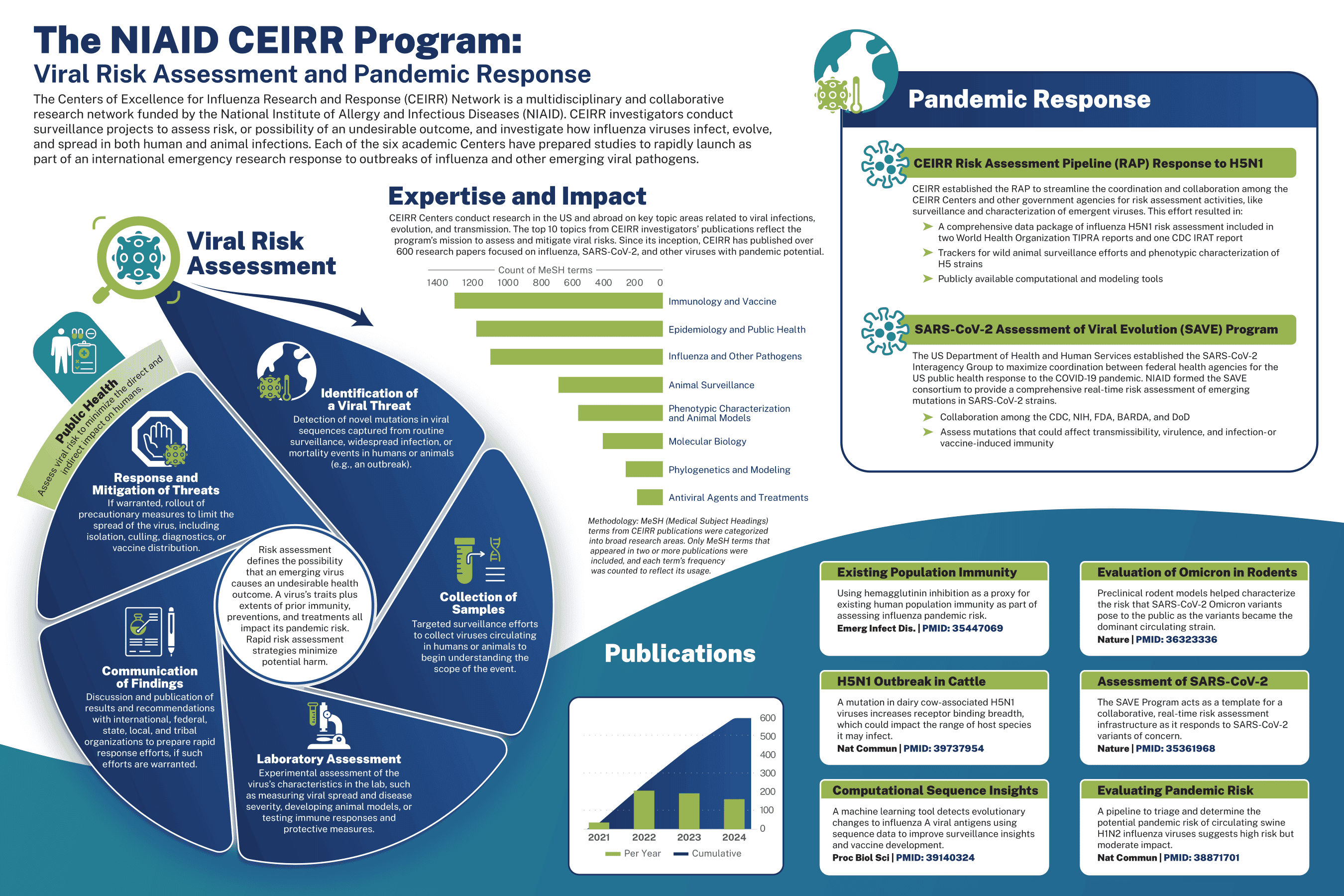
The NIAID CEIRR Program: Viral Risk Assessment and Pandemic Response
The CEIRR Network is a multidisciplinary and collaborate research network funded by NIAID. This infographic describes how CEIRR investigators conduct surveillance projects to assess risk and investigate how influenza viruses infect, evolve, and spread in both humans and animals.
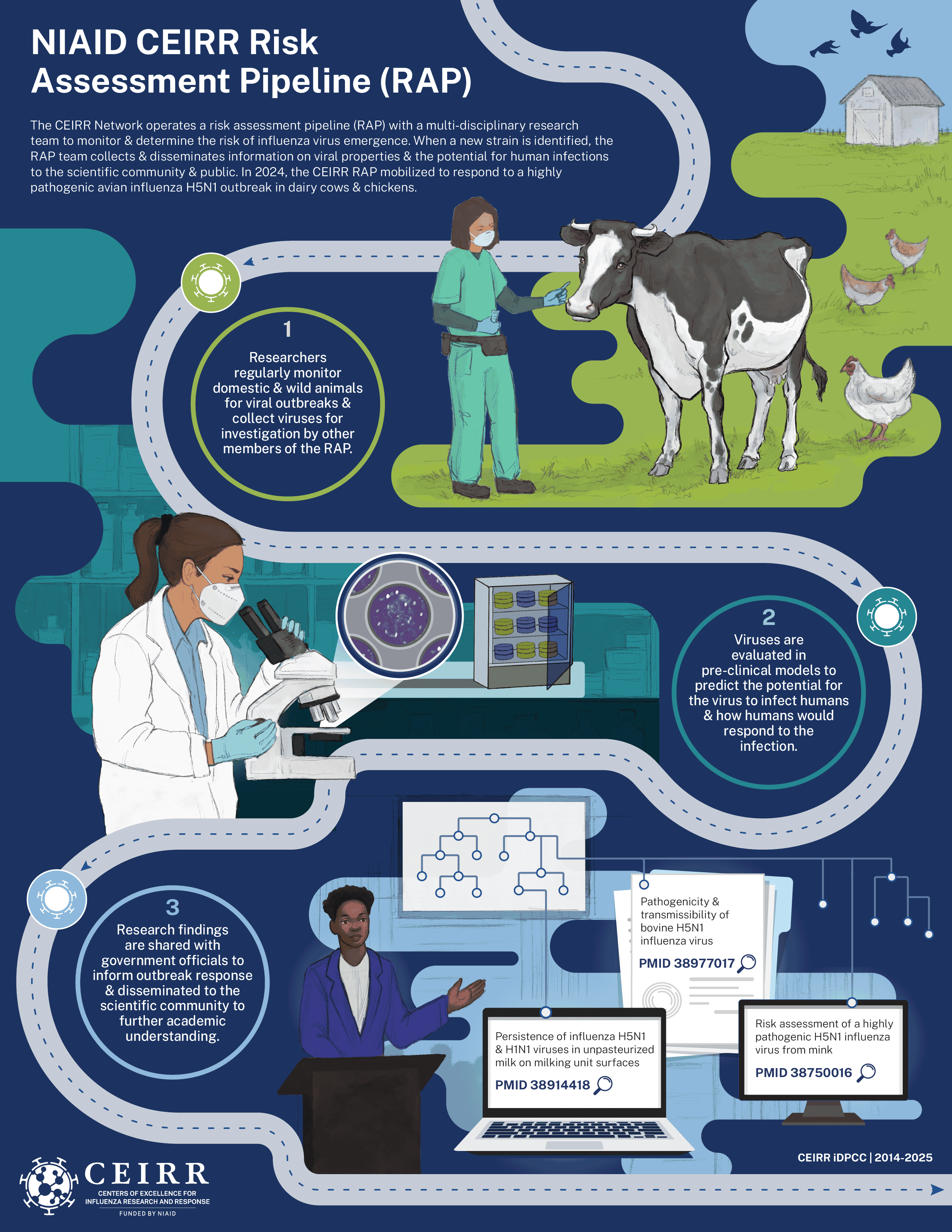
NIAID CEIRR Risk Assessment Pipeline (RAP)
A multi-disciplinary team of researchers in the CEIRR Network actively operates a risk assessment pipeline (RAP) to monitor and determine the risk, or possibility of an undesirable outcome, of influenza viral emergence. This infobyte illustrates how the RAP team mobilizes in response to a viral threat, using the avian H5N1 outbreak in dairy cows as a case study.
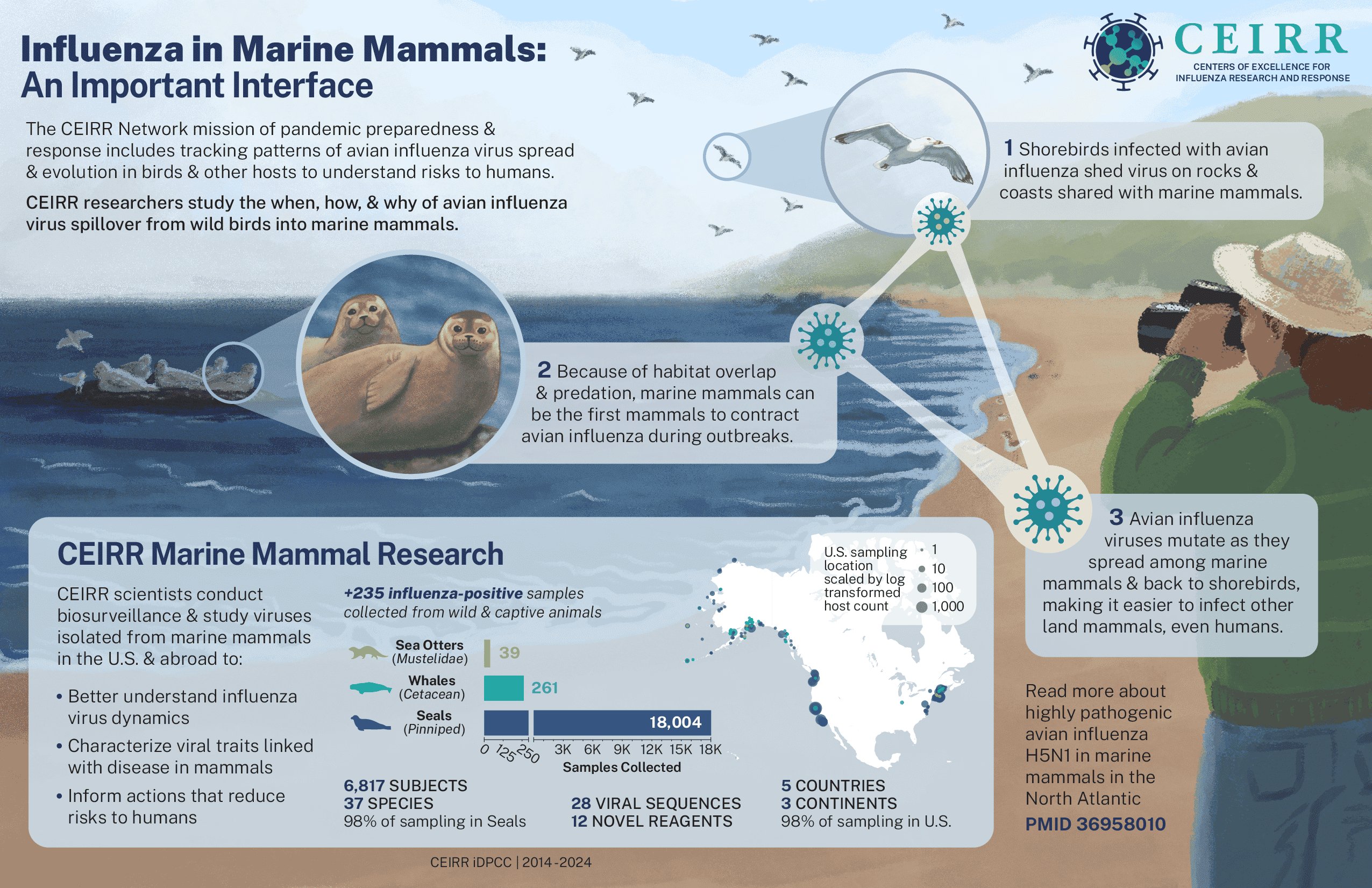
Influenza in Marine Mammals: An Important Interface
CEIRR researchers study the when, how, and why of avian influenza virus spillover from wild birds into marine mammals for pandemic preparedness and research response. This infobyte describes the importance of studying avian influenza infection in marine mammals to understand the virus’s spread, evolution, and risk to other mammals, like humans.
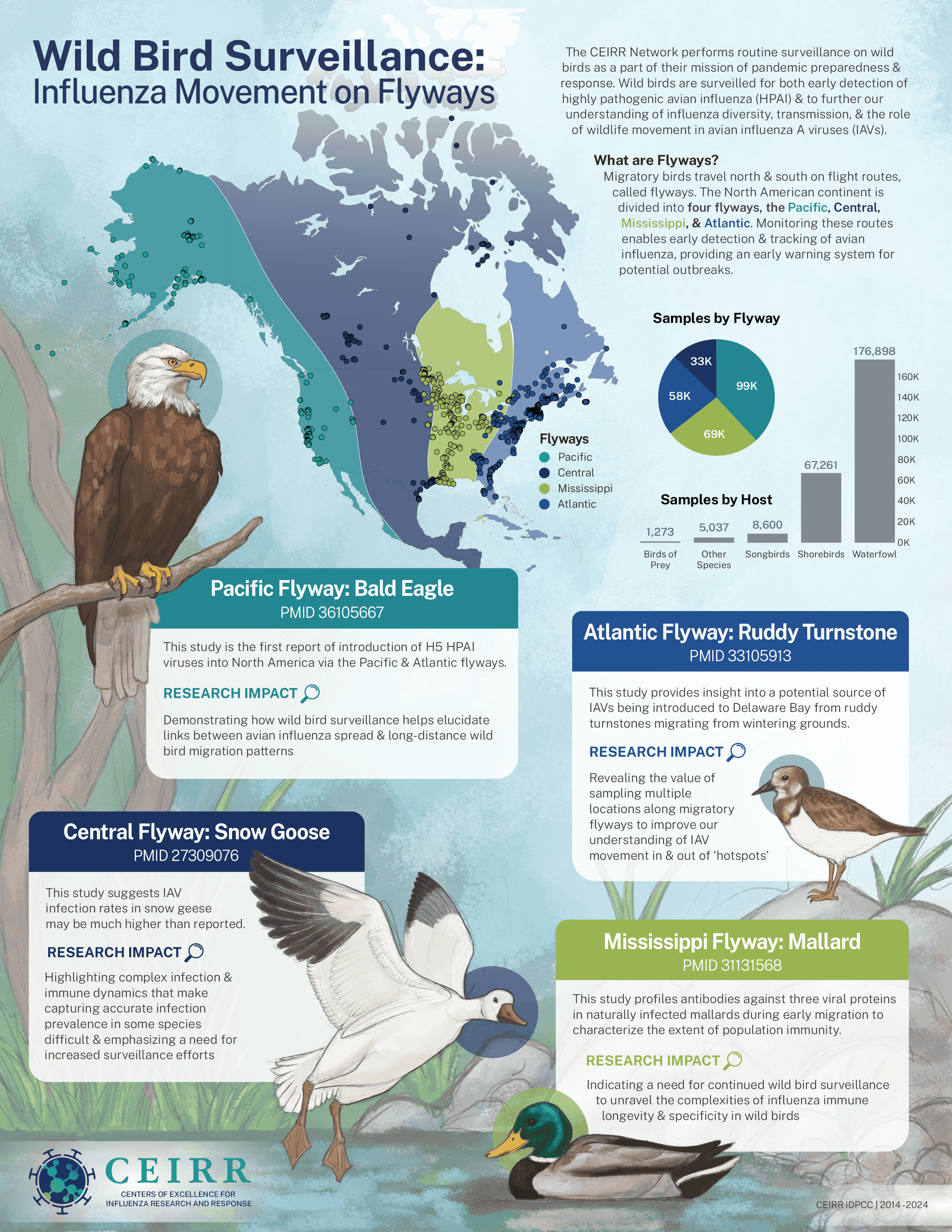
Wild Bird Surveillance: Influenza Movement on Flyways
CEIRR researchers study the movement of avian influenza in wild bird populations for pandemic preparedness and research response. This infobyte depicts the surveillance efforts in wild birds on their migratory flight routes (flyways) to better comprehend influenza diversity, transmission, and the role of movement on the viruses.
Contact us at support@ceirr-network.org to learn more about the infographics or request high-resolution copies.