The iDPCC is delighted to spotlight several CEIRR researchers who were awarded a poster presentation award at the 5th Annual CEIRR Network Meeting (ANM). Our first spotlight in this series is Tobias Frank, a Ph.D. student in the Foxman Lab at Yale University, a Penn-CEIRR institute. Frank earned First Place in the Immunology category for his poster titled “Comparison of mucosal and systemic immune responses in paired serum and upper respiratory samples.”
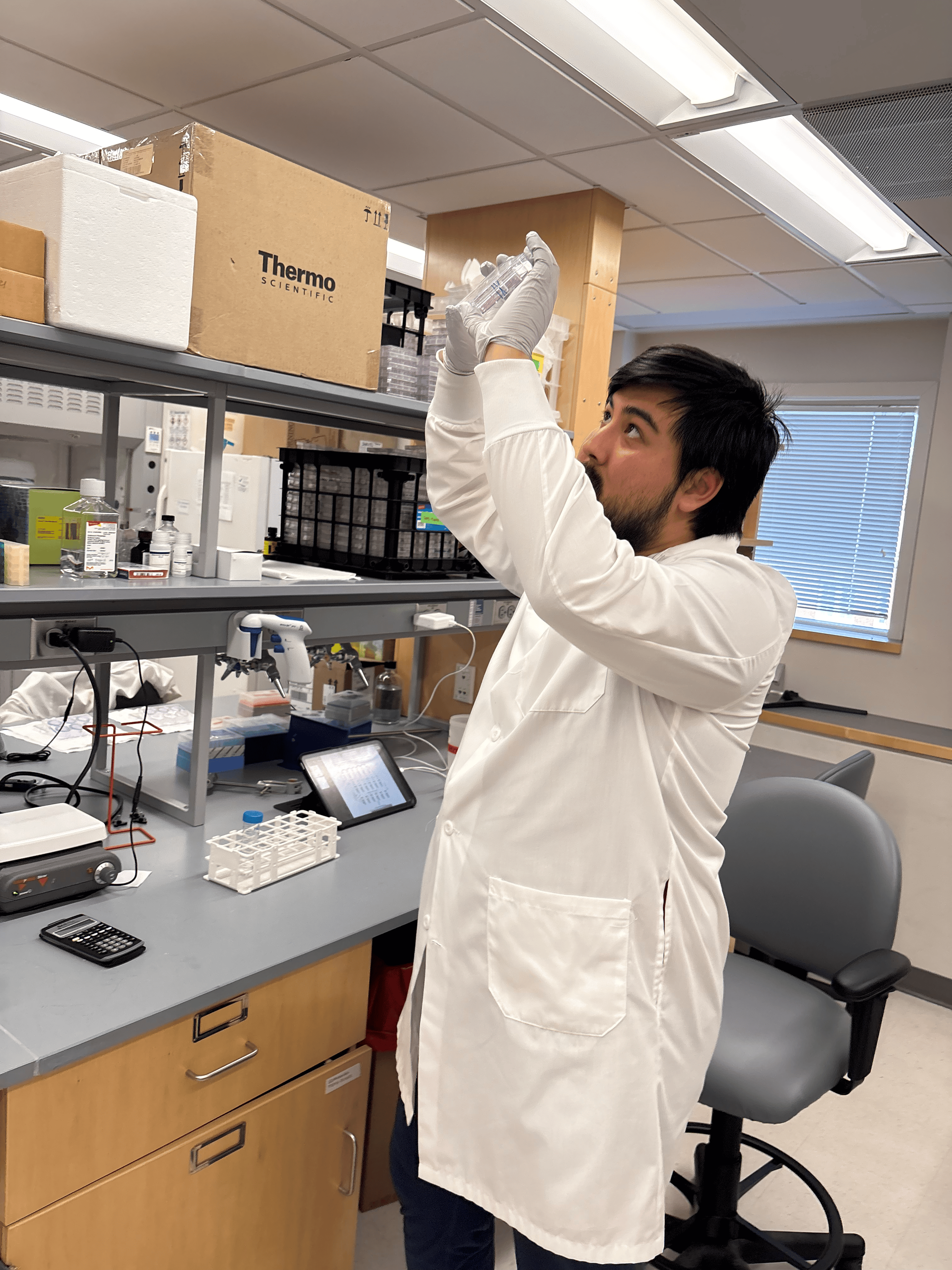
In collaboration with the Hensley Lab at University of Pennsylvania and the NIAID Pandemic Response Repository through Microbial and Immune Surveillance and Epidemiology (PREMISE) Program, Frank and colleagues aimed to better understand the relationship between systemic and mucosal antibody responses due to their critical roles in mediating respiratory virus infection. Paired mucosal and serum samples were obtained from healthy human subjects at baseline and during infection to compare antigen-specific antibodies. Frank leveraged multiplexed antibody analysis, Mesoscale Discovery assays, and Luminex-based bead assays to evaluate these samples. Using these methods, Frank identified and validated cross-reactive antibodies between human metapneumovirus and respiratory syncytial virus (RSV) and found that antigen-specific antibodies correlated between different mucosal samples but not between mucosal and serum samples. According to Frank, “These findings contribute to developing best practices for measuring mucosal IgA and cytokines—enabling researchers to better examine mucosal immune responses during infection—and furthering our understanding of the interplay between mucosal and systemic antibody responses.”
The iDPCC also asked Frank to answer some additional questions about himself:
1. How has the CEIRR Program benefited your scientific training?
A: Besides giving me the opportunity to study the antibody repertoire to influenza, I appreciate how it brings scientists from across the country together. I have talked to trainees and PIs I otherwise would never have the chance to meet, and it has shaped my understanding of influenza and how I want to use my career to help the world.
2. What motivates you to study your current research project(s)?
A: I am a huge fan of board games and puzzle; I love understanding how to optimally play a game or find a pattern within a puzzle. Finding patterns within biology that can be leveraged to prevent future pandemics motivates me to study influenza and other infectious diseases.
3. What impact do you hope your current research project will have?
A: I hope that this work contributes to a better standardization of mucosal sample collection and motivates antibody and cytokine assay optimization for mucosal samples. So much work has been done to characterize and understand antibodies in serum, and I hope that in the future mucosal antibodies become just as well-studied.
4. Who/what inspired you to go into science in general?
A: My high-school science teacher was, and still is, one of my biggest inspirations. His hands-on approach to science made me fall in love with biology, and learning from him made me appreciate the importance of good mentors and teachers in fostering the next generation of scientists.
5. What is one thing on your bucket list?
A: I want to travel across a country without a phone or map, navigating only by asking people for directions. I think it would make me appreciate a country for the people who live in it rather than the attractions that draw tourists.
6. Do you have any hobbies or special interests that you'd like to share?
A: I love to SCUBA Dive! I got certified when I was 10 years old and have been diving for almost 15 years. My favorite sea creatures to look for when SCUBA diving are nudibranchs, which are these vibrantly-colored tiny underwater sea slugs.